VGPmedia

The Blueprint of a Life Well-Lived: Introducing the DBillionaires Podcast

The Blueprint of a Life Well-Lived: Introducing the DBillionaires Podcast

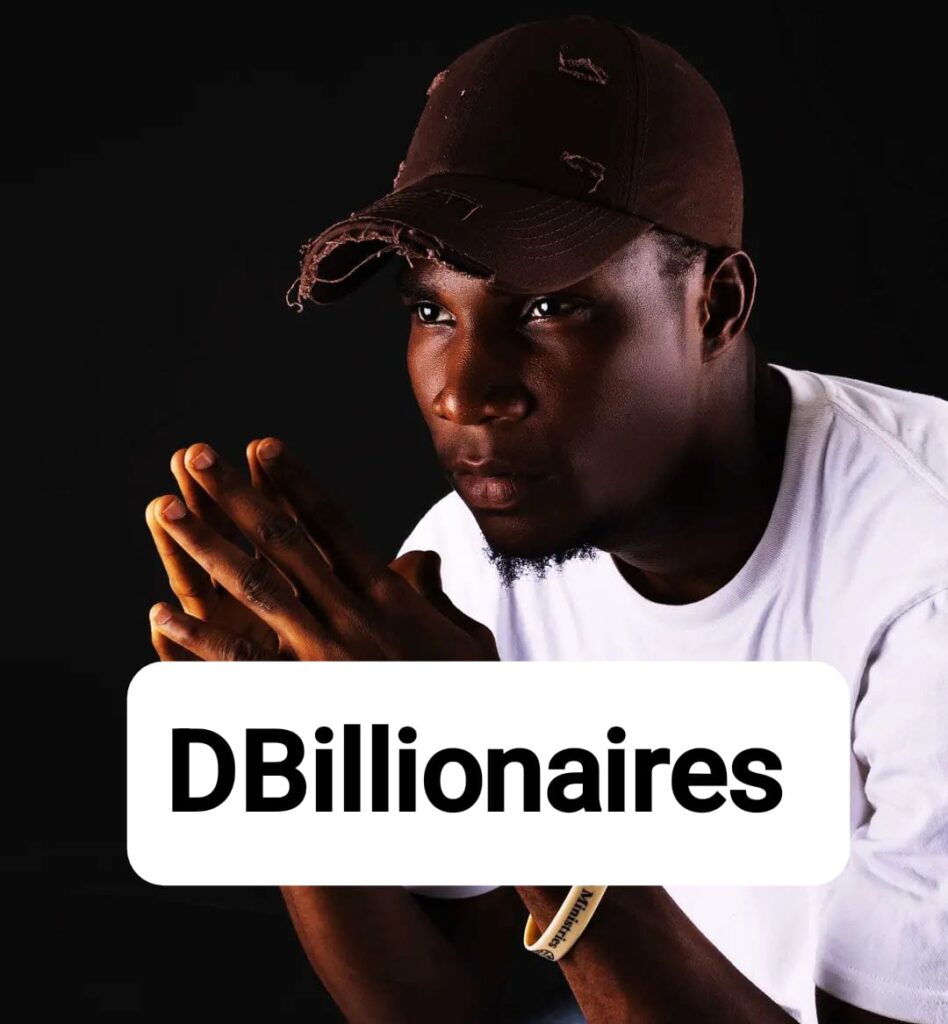
The Blueprint of a Life Well-Lived: Introducing the DBillionaires Podcast   In a world obsessed with the pursuit of more, we often forget to ask ourselves: more of what? True wealth isn’t measured solely by digits in a bank account; it is a symphony of character, vitality, and purpose. Coming soon, we are opening a new door to high-level conversations that challenge the status quo. Welcome to the DBillionaires Podcast, hosted by Danok Virtues. This is more than a show, it is a mission to decode the five dimensions of a life well-lived. Whether you are building an empire or refining your character, we invite you to join a conversation centered on the five pillars that define a true “billionaire” legacy. READ ALSO: How VGP Media Technologies Is Redefining the Creative Economy The 5 Pillars of The DBillionaires Podcast To build something that lasts, you must build on a solid foundation. Our episodes will dive deep into these core areas: Mindset: The Blueprint of the Self Success starts from within. We explore the mental frameworks, resilience, and shifts in perspective required to navigate a complex world. Health: The Engine of Performance You cannot lead an empire if you cannot lead your body. We treat health as the ultimate high-performance asset. Relationships: The Currency of Connection Life is a team sport. We discuss how to cultivate, protect, and grow the bonds that provide the true richness of the human experience. Religion/Spirituality: The Foundation of Purpose True success requires an anchor. We explore the faith and spiritual grounding that provide the “why” behind the “what.” Finance: The Tool for Freedom Money is the fuel, not the destination. We break down the strategies to master finance so it serves your vision, rather than dictating your life. “Welcome to the DBillionaires Podcast. Where we decode the five dimensions of a life well-lived: Mindset, Health, Relationship, Faith, and Finance. This isn’t just about the bank account, my friend it’s about the legacy. Welcome to the conversation.” Stay Connected The journey to the top is better when you have the right map. The DBillionaires Podcast is your guide to building a life that is as rich in purpose as it is in profit. Are you ready to build your legacy? Keep an eye on this space for our official launch date and guest lineup. The conversation is just beginning.

The Blueprint of a Life Well-Lived: Introducing the DBillionaires Podcast Read More »
Your Business Is Fundable. You Just Don’t Know How to Prove It.

Your Business Is Fundable. You Don’t Just Know How to Prove It.

Your Business Is Fundable. You Just Don’t Know How to Prove It. The most common complaint from Nigerian SME owners is that “funding is not available”. That is not accurate. What is accurate is that most SMEs cannot demonstrate creditworthiness in the language that lenders and investors speak. The money exists. The gap is preparation, documentation, and positioning. Between the Bank of Industry, Development Bank of Nigeria, NIRSAL Microfinance Bank, CBN’s intervention funds, and growing private equity interest in African markets, there are billions of naira sitting in funding pipelines.   The African Development Bank alone committed over $4 billion to private sector development across the continent in 2023. Nigerian businesses are eligible for a portion of that capital. Most never access it. So Why Are So Many Businesses Still Struggling to Get In?   1. They Have No Financial Records If you cannot show 2–3 years of consistent bookkeeping, most institutional lenders will not engage with you. They’re not being difficult. They’re managing risk. Your financial records are the only evidence they have that your business operates the way you say it does. Start your records today, even if you have to reconstruct the last 12 months with bank statements and receipts. 2. They Cannot Articulate Their Business Model Clearly A funding application is not a prayer request. It is a business case. You need to show: – Revenue streams – Cost structure – Customer acquisition strategy – Growth trajectory – Exactly how the funding will generate returns that allow repayment or provide investor upside Emotion does not close funding rounds. Data does. 3. They Approach the Wrong Sources at the Wrong Stage A start-up with six months of revenue should not be approaching BOI for a ₦50 million facility. Understand which funding instruments match your stage: – Grants & microloans → Early-stage businesses with limited track records – Angel investment → Proven demand, needing growth capital – Venture debt & private equity → Demonstrable revenue and scalable models Other Barriers Worth Naming Collateral requirements remain a challenge, especially for businesses without fixed assets. But several CBN intervention funds and development finance institutions have moved toward cash-flow-based lending. They want to see revenue consistency more than property titles. That shift favors prepared businesses. Your pitch matters as much as your numbers. Investors and lenders are human. They fund people they believe in, backed by numbers they trust. Practice telling your business story clearly. Know your unit economics. Know what your growth looks like with and without the funding. Know your market size and your position within it. The business that gets funded is not always the best business. It is the best-prepared one. Get your books in order. Tell your story with numbers. Then go and ask.

Your Business Is Fundable. You Don’t Just Know How to Prove It. Read More »

FIRS Is Not Your Enemy. Ignorance Is.

FIRS Is Not Your Enemy. Ignorance Is. Let’s be honest. Most Nigerian business owners treat tax compliance like a problem they’ll deal with later. Later always comes with penalties. The Federal Inland Revenue Service has been increasing enforcement activity across sectors. In 2023, Nigeria’s tax-to-GDP ratio sat at approximately 10.86% one of the lowest among comparable economies globally. The government is actively closing that gap.   The businesses caught unprepared are paying twice: once in taxes owed, once in fines and reputational damage. This is not a threat. It is a pattern. And patterns are predictable. Here’s What Every Nigerian Business Owner Needs to Understand Right Now:   1. Your Business Structure Determines Your Tax: Exposure A sole proprietor pays Personal Income Tax administered by the State Internal Revenue Service. A Limited Liability Company pays Companies Income Tax at 30% of taxable profits, or 20% if annual turnover falls below ₦25 million. Knowing which applies to you is not optional. Operating under the wrong assumption costs real money. 2. VAT Compliance Is No Longer Invisible Since the Finance Act 2020, businesses with annual turnover above ₦25 million must register for and remit Value Added Tax at 7.5%. Many SMEs are still operating as if the old threshold and old rate never changed. They are wrong, and they are exposed. 3. Withholding Tax Affects Your Cash Flow Directly If you do business with registered companies, they will deduct WHT from payments before funds reach you. You need to track those deductions and use them as tax credits when filing. Most business owners leave this money on the table because they never file a return that captures it. That is not a tax problem. That is a financial discipline problem. 4. The Laws Have Changed Keep Up The Finance Acts of 2019, 2020, 2021, and 2023 have each introduced meaningful changes: – Transfer pricing rules have tightened – Digital service taxes have been introduced – Minimum tax provisions have been updated If your knowledge of Nigerian tax law stopped at what your accountant told you four years ago, you are operating on outdated intelligence. READ ALSO: What Global Leaders Know That They Never Teach in School Practical Steps to Take Today:   1. Register properly with the Corporate Affairs Commission and obtain your Tax Identification Number if you haven’t. 2. Engage a qualified accountant who specializes in Nigerian tax compliance, not just someone who files returns. 3. Review your VAT registration status are you required to remit? 4. Set aside a percentage of every invoice for tax obligations before you allocate profit. 5. File your annual returns even in years where you made no profit. The business owners who stay protected are not necessarily the ones paying the most tax. They are the ones paying the right tax, on time, with documentation that supports every deduction they claim. The solution is not to fear FIRS. The solution is to understand the rules well enough to operate within them strategically. Tax planning is a legitimate business function. Avoidance through ignorance is not a strategy. It’s a liability sitting on your balance sheet, waiting to surface at the worst possible time. Taxes are not a punishment for success. They are the price of operating in a functioning market. Pay them intelligently.

FIRS Is Not Your Enemy. Ignorance Is. Read More »

What Global Leaders Know That They Never Teach in School

What Global Leaders Know That They Never Teach in School   You will not find this in any MBA curriculum. The world’s most effective industry leaders share a set of habits and beliefs that are rarely discussed in public. Not because they’re secrets but because most people are too focused on tactics to slow down and study principles. Tactics change with markets. Principles survive them. Here are five things the best leaders in the world know and practice consistently. 1. They Make Fewer Decisions, Not More Warren Buffett has said he’d rather do nothing than do something mediocre. Jeff Bezos built Amazon’s decision culture around one key distinction: reversible vs irreversible decisions. Reversible ones get made fast, at the lowest appropriate level. Irreversible ones get intense scrutiny. Leaders who make fewer, higher-quality decisions consistently outperform those who are always reacting. Decision fatigue is real. Guard your best thinking for your biggest choices. 2. They Protect Their Thinking Time Bill Gates famously took “Think Weeks” twice a year. No meetings. No calls. Just books, research, and reflection. Your best decisions will never come from a packed schedule. If every hour of your day is accounted for, you have no room for the clarity that produces your next breakthrough. Block time to think. Treat it with the same seriousness you give client meetings. READ ALSO: The Creator Economy Is Producing Millionaires 3. They Hire People Who Will Contradict Them Steve Jobs surrounded himself with people willing to push back on his ideas. Leaders who only hear agreement are flying blind. The most dangerous position for any leader is being the smartest person in every room they enter. Build a team that challenges your assumptions, catches your blind spots, and brings perspectives you haven’t considered. That friction isn’t a problem. It’s quality control. 4. They Treat Failure as Data Elon Musk’s SpaceX exploded rockets repeatedly publicly. Each explosion produced engineering data that made the next attempt more precise. The company eventually achieved what no private organization had done before. Most business owners treat failure as a verdict on their worth. Top global leaders treat it as a variable in a longer experiment. Change your relationship with failure and your risk tolerance expands. Your risk tolerance expands and your ambition scales. 5. They Think in Decades While competitors plan quarters, the most dominant industry leaders are building ten and twenty-year positions. Amazon ran at a loss for years because Bezos was playing a fundamentally different game. He wasn’t optimizing for this quarter. He was building infrastructure that would make the company indispensable for a generation. Ask yourself: What are you building that will still matter in 2035? The Real Gap The gap between where you are and where you want to be is almost never about resources. It’s about the quality of your thinking, the discipline of your habits, and your willingness to operate on a timeline longer than your competition is comfortable with. Upgrade your thinking. The results take care of themselves.

What Global Leaders Know That They Never Teach in School Read More »

The Creator Economy Is Producing Millionaires

The Creator Economy Is Producing Millionaires The global creator economy was valued at over $250 billion in 2024, according to Goldman Sachs. By 2027, projections put it above $480 billion. Nigerian creators are right in the middle of this shift. Most don’t realize the size of what they’re standing on. This Isn’t About YouTube. It’s About Business Models. Mr Beast now earns more from his Feas-tables chocolate brand than from YouTube ad revenue. That’s the signal. The platform is just distribution. The real asset is audience trust.   Nigerian creators especially in comedy, lifestyle, education, fashion, and finance are sitting on audiences that global brands are desperate to reach. The Shift That’s Already Here Platforms are paying less per view. Algorithm changes are killing organic reach. Creators who built their entire income on monetization are feeling the squeeze. Creators who treated their audience like a business asset are thriving. Here’s What Smart Creators Are Doing Right Now:   1. They Treat Their Audience Like a Business Unit They track engagement rates, not just follower counts. A creator with 30,000 highly engaged followers in a specific niche is worth more to a brand than one with 500,000 passive viewers. Brands know this. Price accordingly. 2. They Monetize Beyond Platform Payouts Digital products. Online courses. Paid communities. Merch. Licensing deals. Speaking gigs. Waiting for AdSense checks is a 2018 strategy. Example: A Nigerian finance creator selling a personal budgeting course to 500 buyers at ₦15,000 each = ₦7.5M from one launch. 3. They Build in Public and Archive Their Influence Document your journey. Share your process. Build in real time. You compound loyalty faster when people watch you become, not just when you post polished content. Audiences follow people, not content categories. 4. They Think in Intellectual Property Your content format. Your recurring segment. Your catchphrase. Your visual identity. Those are assets. They appreciate as your audience grows. Creators who get IP will license formats, sell branded content frameworks, and build media companies not just channels. Nigeria’s Unfair Advantage We have the stories. The energy. The cultural relevance. The domestic market. Afro beats proved Nigerian culture exports at scale. Content is the next frontier. READ ALSO: How VGP Media Technologies Is Redefining the Creative Economy The infrastructure is already here: – Affordable smartphones – Growing internet penetration – A young population that consumes digital content aggressively Here’s the bottom line: The creators who will dominate the next five years won’t be the ones with the best camera. They’ll be the ones who stopped seeing themselves as entertainers and started seeing themselves as media businesses with audiences, products, and brand partnerships. Dear VGP Valued Partner, Build accordingly.

The Creator Economy Is Producing Millionaires Read More »

How VGP Media Technologies Is Redefining the Creative Economy

How VGP Media Technologies Is Redefining the Creative Economy   In an era where attention is the new global currency, the difference between brands that survive and brands that dominate lies in the power of their story. At VGP Media Technologies, we don’t just produce content. We build an ecosystem where premium storytelling meets strategic market dominance. As we scale toward 2026 and beyond, our vision is clear: become the bridge between bespoke luxury and digital virtuals giving every brand a cinematic voice.   The Blueprint: What We’re Building VGP is evolving from a media house into a global creative powerhouse. From our roots in Nigeria to our strategic launch in the United States, our expansion rests on three unbreakable pillars: 1. Cinematic Documentation & Luxury Branding We’re setting a new gold standard for visual production. From high-end documentaries to premium photography, we craft visual identities for industry titans. Every project is an exquisite experience designed to position our clients at the top of their markets. 2. The D-Billionaires Ecosystem Success is a science. Legacy is an art. Through the D-Billionaires Podcast, we’re building a library of wisdom on business scaling, mindset, and wellness a blueprint for sustainable wealth and intentional living for high-achieving professionals. 3. Strategic Leverage & Organizational Excellence Our greatest assets are time and leverage. We run a high-performance team with military precision and creative soul. With rigorous structure and ethical leadership, VGP isn’t just a company it’s a standard of excellence. The Creative Partnership: A New Way to Earn We’re looking for visionaries, not vendors. For creatives who know their talent is a high-value service, not charity. If you’re a photographer, brand designer, cinematographer, or digital strategist, here’s how partnering with VGP 10x’s your trajectory: Move from Freelancer to Strategic Partner No free work. Your time is your life-force. You’re integrated into premium projects where the value floor is set high. We handle strategic positioning; you deliver creative excellence. Leverage VGP Brand Equity Work on A-list projects luxury outlet launches, cinematic brand manifestos. That exposure instantly elevates your portfolio and lets you command premium rates independently. Access Mentorship & Business Scaling Being creative is one thing. Being a creative entrepreneur is another. Inside VGP, you learn the VGP Method for scaling, positioning, and market dominance. We don’t just want you to work for us. We want you to grow with us. Join the Vision We’re exporting African creativity to the world with unparalleled sophistication. Through technical recruitment drives and collaborative productions, there’s a seat at the table for those who value Integrity, Excellence, and Purpose. VGP Media Technologies isn’t just a brand. It’s an invitation to build something that outlives us.  “Our greatest assets are time and leverage. Let us use them to build a legacy that speaks for generations.” Daniel Anthony Okpara, CEO Are you ready to elevate your craft? The future is waiting.

How VGP Media Technologies Is Redefining the Creative Economy Read More »